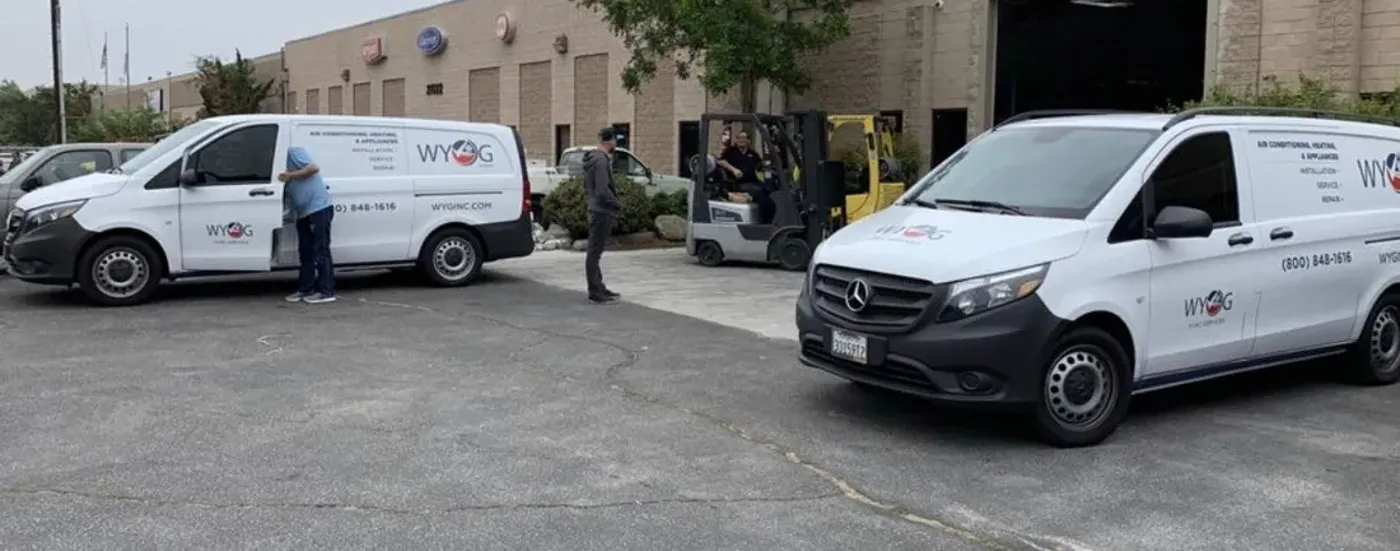
By the WY&G, Inc. team: licensed HVAC contractor, CSLB C-20 #1044922, over 25 years and thousands of customers in the Santa Clarita Valley and Orange County.
When ductless is the right fix
- A converted garage. Very common in Canyon Country and Newhall. The original system was never sized for that square footage, and the garage slab and uninsulated ceiling make it the coldest space in the house.
- An addition or a permit room. If the duct trunk ends before the new wall, running a branch all the way out there often costs more and works worse than one head.
- An ADU or a detached office. It needs its own control anyway.
- A bonus room over the garage. Floor over unheated space, roof on three sides, at the far end of the longest duct. Three strikes.
- A manufactured home in Castaic or Agua Dulce where the ducts run under the floor and replacing them isn't practical.
- One person who's always cold or always hot. A single room with its own set point ends a long argument.
When it isn't the answer
Be careful here, because a mini split is a real piece of equipment and we'd rather you spend the money once.
- The whole house is cold. Fix the furnace or the ducts. A head in one room just hides the problem. See cold back bedroom.
- The duct already reaches the room and blows well. Then it's usually balancing, insulation or windows, not new equipment.
- Several rooms are cold. A multi zone mini split can do it, but at that point compare it honestly against zoning the ducted system. See zoned systems.
- You hate the look of a wall head. Say so up front. There are ceiling cassette and floor mounted options, and they change what the install involves.
How it handles our winters
A mini split is a heat pump. It moves heat from outside into the room instead of burning anything, and in Santa Clarita Valley winters that works well: our cold nights are cold, not Midwest cold. On a 35 degree night in Canyon Country a modern unit still makes plenty of heat.
Two things to expect. First, the outdoor unit runs in winter and will go into defrost for a few minutes now and then, with steam off the coil and the indoor fan pausing. That's normal, not a fault. Second, the air out of the head is warm, not furnace hot, and it runs longer at low speed instead of blasting and shutting off. People who are used to a gas furnace notice that in the first week and stop noticing it after that.
If your head is already in and showing a blinking light, that's a stored fault code. See mini split blinking light.
What drives the price
No numbers in an article, but these are the things that move the quote, and you can look at most of them yourself before we come out:
- How many heads. One head on one outdoor unit is the simple case. Multi zone means a bigger outdoor unit and more line sets.
- Capacity. Sized to the room: square footage, ceiling height, insulation, glass, which direction it faces. A garage conversion with an uninsulated ceiling needs more than the same size bedroom.
- Line set length and routing. Short run from the head straight out to a pad is easy. Running line set up and over a roof, around to the far side of the house, or through a finished wall is labor.
- Where the outdoor unit goes. Ground pad, wall brackets, side yard clearance, how close to a bedroom window, HOA rules in parts of Valencia and Stevenson Ranch.
- Electrical. A mini split needs its own circuit. If the panel is full or old, that's an upgrade on top, and it's the item that surprises people most.
- Condensate drain. Gravity to the outside is simple. A condensate pump or a long drain route adds work.
- Wall type. Stucco, brick or a block garage wall takes longer to penetrate and patch than wood frame and siding.
- Efficiency tier and brand. Higher efficiency and better low temperature performance cost more up front.
- Permit and inspection. Mechanical and electrical work on a dwelling gets permitted. Build that into the timeline.
Living with one
- Filters. Two washable screens behind the front cover. Rinse them about monthly, let them dry, put them back. That's most of the maintenance.
- Quiet. Indoors it's a low fan. The outdoor unit is quieter than a central condenser, which matters if it's under a window.
- No duct loss. Nothing is being delivered through the attic, so nothing leaks into it.
- It cools too. Same unit, and in summer that converted garage goes from the worst room to the most comfortable one.
- Keep the door open or closed? Closed. It's heating that room, not the house.
- Yearly service still makes sense: coil cleaning, drain, refrigerant circuit check. See ductless mini split repair.
Ask these before you sign anything
- What size did you calculate for this room, and how?
- Where exactly will the outdoor unit sit, and where will the line set run?
- Does my panel have room for the new circuit, or is that extra?
- Who pulls the permit?
- What's covered on the equipment and on your labor, in writing?
- Will the existing furnace and ducts still be serving the rest of the house unchanged?
Any contractor worth hiring will answer all six without hedging.
Ductless installation in the Santa Clarita Valley
WY&G is a licensed HVAC contractor (CSLB C-20 #1044922) based in Santa Clarita, with over 25 years in the Santa Clarita Valley. We install and service ductless systems in Canyon Country, Saugus, Newhall, Valencia, Castaic and Agua Dulce, and we'll tell you if a duct repair would serve you better than new equipment. See ductless mini split systems and ductless in Santa Clarita.
Call (661) 250-6056 or book online.