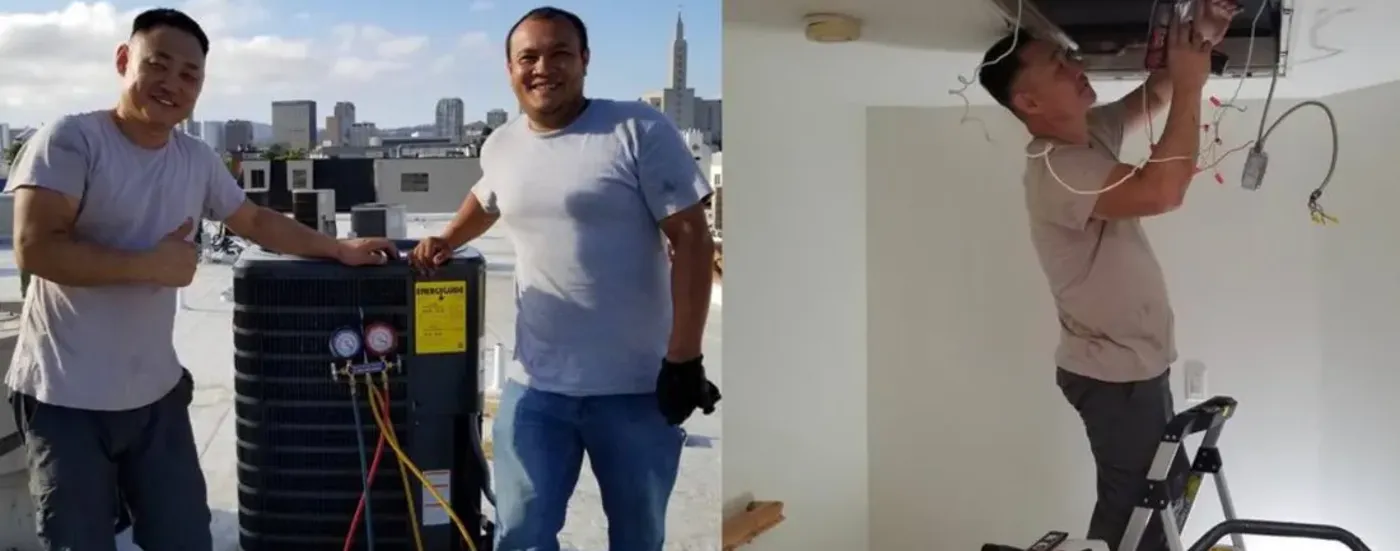
By the WY&G, Inc. team: licensed HVAC contractor, CSLB C-20 #1044922, over 25 years and thousands of customers in the Santa Clarita Valley and Orange County.
Why November is the step up
October in the Santa Clarita Valley is still warm enough that most houses barely call for heat. Then the pattern changes: a 75 degree afternoon, a 40 degree night. The furnace that ran zero hours in September now runs through the night, every night. Canyon Country, Agua Dulce and Castaic swing colder after dark than Valencia or Stevenson Ranch, so the same house with the same thermostat setting costs more to heat out there. Nothing is broken. It's the first full month of real heating.
Worth knowing: SoCalGas bills gas by the therm and your usage, not the rate, is what moves most in winter. If you want the exact rate and baseline for your address, that's on your bill or in your SoCalGas account. On the electric side, a heat pump's cost depends on which SCE rate plan you're on and when it runs, so check your plan before you compare anything.
What actually drives the cost
- Run hours. The biggest factor by far, and mostly weather. A cold snap doubles run time.
- Your set point. Every degree you hold costs more, and holding 72 all night costs noticeably more than letting the house drift and warming it in the morning.
- Furnace efficiency and age. An 80% furnace sends a fifth of the gas it burns out the flue. A modern condensing furnace is in the 90s. A 25 year old unit that's also short cycling wastes more on top of that.
- Duct leaks. This is the one people miss. In most local tract homes the furnace and ducts are in the attic. Heated air that leaks out of a loose boot or a torn duct never reaches a room, and you paid for all of it.
- Airflow. A filter that's packed makes the blower work harder and can make the furnace overheat and shut down mid cycle, so it runs longer to do the same job.
- The house itself. Attic insulation that's been walked flat, single pane windows, a leaky slider, an uninsulated garage ceiling under a bedroom.
- The blower motor. On the electric side of the bill, an old single speed blower draws a lot more than a variable speed one over a long night.
Changes that cost nothing
- Set it back at night and when you're out. A few degrees for eight hours is the cheapest saving available. Programmable or smart thermostats do it for you. See smart thermostats.
- Fresh filter. Monthly look, change when it's gray. Not more expensive filter, just not a clogged one.
- Open the registers in rooms you use, clear the furniture off them. Don't close off half the house, that raises duct pressure.
- Close blinds and curtains after sunset. Glass is where a Santa Clarita house loses its evening heat.
- Run the ceiling fan on low, reversed. In a room with a high ceiling it pushes warm air back down.
- Fix the drafts you can feel. Weatherstrip on the door to the garage, a sweep on the slider.
- Stop using space heaters as a whole house plan. One room, fine. Three of them running on electricity all evening is an expensive way to heat a house.
When a high bill means something is wrong
Weather explains a normal jump. These are different:
- The bill is way up but the house still isn't comfortable.
- The furnace runs almost continuously and never satisfies the thermostat.
- It starts, runs a few minutes, shuts off, starts again. See what short cycling timing tells you.
- Some rooms are cold while the system runs nonstop, which points at ducts.
- Any gas smell. Leave the house and call SoCalGas or 911 from outside. Don't try to find it yourself.
Repair, tune up, or replace: what drives the price
We won't quote a number in a blog post, but here's what moves it:
- A tune up is the flat, cheapest end. It cleans the flame sensor and burners, checks safeties and the heat exchanger, and makes sure the furnace isn't wasting gas on bad combustion. See heating tune-up.
- A repair depends on the part and the access. A flame sensor or igniter is a short visit. A blower motor or control board on a furnace wedged into a tight attic takes much longer, and labor is most of what you pay.
- Duct work depends on how many feet have to be replaced versus sealed, and how much room there is to work up there.
- Replacement depends on the size the house actually needs, the efficiency tier you pick, whether the existing ducts and the flue can stay, attic access, and permit and inspection requirements. Going to a heat pump adds electrical: the circuit, sometimes the panel.
The honest version is that on a 20 plus year old furnace, money spent on a second big repair often belongs in a replacement instead. We walk through that with you. See furnace repair or replacement.
A tune up pays for itself in run hours
A furnace with a clean burner, correct gas pressure and good airflow does the same job in fewer minutes. One with a dirty flame sensor that keeps relighting, or a choked filter that trips the limit switch, runs longer and still leaves the house cool. That's the part of your bill that a yearly visit actually changes. See maintenance plans and tune-ups in Santa Clarita.
Talk to a local HVAC contractor
WY&G is a licensed HVAC contractor (CSLB C-20 #1044922) in Santa Clarita, over 25 years in the Santa Clarita Valley. We service and replace furnaces and heat pumps in Valencia, Saugus, Newhall, Canyon Country, Stevenson Ranch, Castaic and Agua Dulce, and we'll tell you straight whether your bill is weather or a problem.
Call (661) 250-6056 or book online.